Ricky


SLC-500 FIFO Find Moving Average 1

Introduction to the SLC-500 FIFO Find Moving Average We’ll use the SLC 500 FIFO to find the Moving Average of a value. The SLC-500 FIFO (First In – First Out) can be used to store data that needs to be retrieved later. For example: We can read a product code Read More »
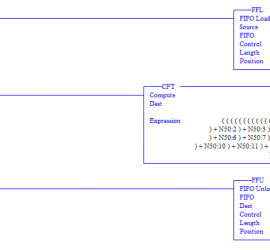
FIFO Overview

SLC-500 DDE/OPC

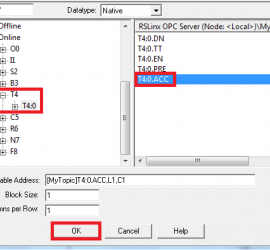
Introduction to SLC-500 DDE/OPC (Dynamic Data Exchange) There are many reasons to link data from a processor to a spreadsheet using RSLinx for SLC-500 DDE/OPC. You can list all conditions that are required to be met prior to equipment starting. If you equipment does not start, simply look down the Read More »

SLC DDE

Counters in the SLC-500

Introduction to Counters in the SLC-500 processor Counters in the SLC-500 work in a similar way to some external hardware counters. Each time the rung goes true, the counter is activated, and the accumulator value will change by 1 count. There are two types of counters: the Up Counter (CTU) Read More »

Counter Logic

Timers in the SLC-500

Introduction to timers in the SLC-500 Processor. Timers in the SLC-500 processor are very similar to timers in other AB Processors. There are 3 types of timers: On Delay (TON), Off Delay (TOF) and the Retentive Timer (RTO). The On Delay Timer (TON) delays the Done bit (DN) from turning Read More »

RTO Timer

Trapping in the SLC-500

Introduction to Trapping in the SLC-500 In this document, I will guide you through my method of trapping in the SLC-500. We will use this tool to find intermittent problems. For example: a guard door, pressure switch, thermal switch, or other inputs could shut down your process. Be aware that Read More »

Fault Log

SLC-500 Histogram 1

Introduction to the SLC-500 Histogram We use the SLC-500 Histogram to track infrequent bits (such as Intermittent problems) and bits that change quickly in the processor. A common use for the histogram is to find intermittent problems. In this post, I will guide you through the procedure for setting up Read More »

Histogram

SLC to ControlLogix Messaging 2

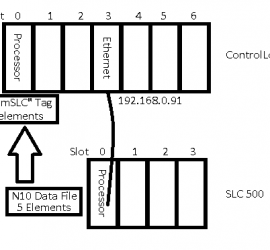
Introduction to SLC to ControlLogix Messaging SLC to ControlLogix Messaging might be easier than you think. For example, the SLC 5/05 will take 5 integers from the N10 data file, and send those 10 integers to the Allen Bradley ControlLogix processor. The ControlLogix does not have the same addressing structure Read More »

Message Goal

Scale With Parameters (SCP)

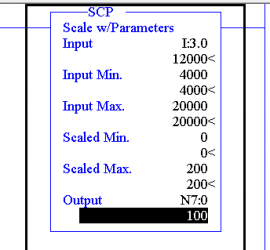
Introduction to Scale With Parameters (SCP) We use the Scale With Parameters (SCP) instruction to convert raw data into Engineering Units. Examples of engineering units are Percent, RPM, Pounds of pressure, gallons per minute, etc. The data we get from an analog input module, such as the 1746-NI8, is called Read More »

Scale with Parameters

SLC 500 Retentive Timer

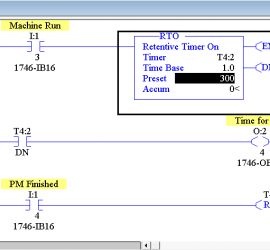
Introduction to the SLC 500 Retentive Timer The SLC 500 Retentive timer (RTO) keeps total track of time. Initially, when the rung goes true, the accumulated value begins to increase. When the rung goes false, the accumulated value stops increasing. The next time the timer goes true, the accumulated value Read More »

Retentive Timer Logic

SLC 500 Off Delay Timer

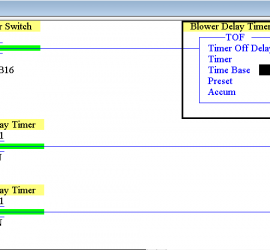
Introduction to the SLC 500 Off Delay Timer The SLC 500 Off Delay Timer (TOF) Delays the DN (Done) bit from shutting off. Many people will find this as the most confusing type of timer. Once you understand it’s operation, and relate it to a real process, however, its easy Read More »

Timer Off Delay